
The Task
Every new PPC account starts the same way. Campaign structure, ad groups, keyword lists, RSA ad copy, geo-targeting, bid strategy configuration, negative keyword lists, naming conventions. For property management accounts — which follow a highly standardized structure across BDRM (bedroom-based), GEO (neighborhood-based), Brand, and Remarketing campaigns — a manual build meant 2 to 4 hours in the Google Ads interface.
Clicking through campaign creation wizards. Copying settings from template accounts. Writing 15 headlines and 4 descriptions per ad group. Double-checking every headline is under 30 characters, every description under 90. Manually configuring radius targeting around each property. Setting up negative keyword lists. Getting the naming conventions exactly right so reporting scripts can parse them downstream.
The Pain at Scale
In the property management vertical, new accounts don’t arrive one at a time. They come in batches. A portfolio acquires three new properties in a month. A management company onboards a cluster of buildings at once. Each one needs a full account build before ads can run — and every hour spent on setup is an hour stolen from the 87 accounts already running and generating revenue.
The math doesn’t work. At 2-4 hours per manual build, a batch of three new properties is a full day of setup work. Meanwhile, existing accounts — the ones already spending real money — get neglected. Optimization work gets pushed. Pacing issues go unnoticed. The accounts that are already live subsidize the time you’re spending on accounts that haven’t launched yet.
And consistency suffers. Manual builds introduce variance: a naming convention drifts from “BDRM” to “Bedroom” to “BR,” and suddenly reporting scripts can’t parse it. A negative keyword list gets missed on one campaign. A geo radius gets set to 20 miles instead of the standard 15. RSA headlines get written from memory instead of verified against the property’s actual website, and now you’re advertising amenities the building doesn’t have.
Across dozens of accounts, those small inconsistencies compound into management headaches downstream. You spend time later fixing things that should have been right from the start.
The Agent
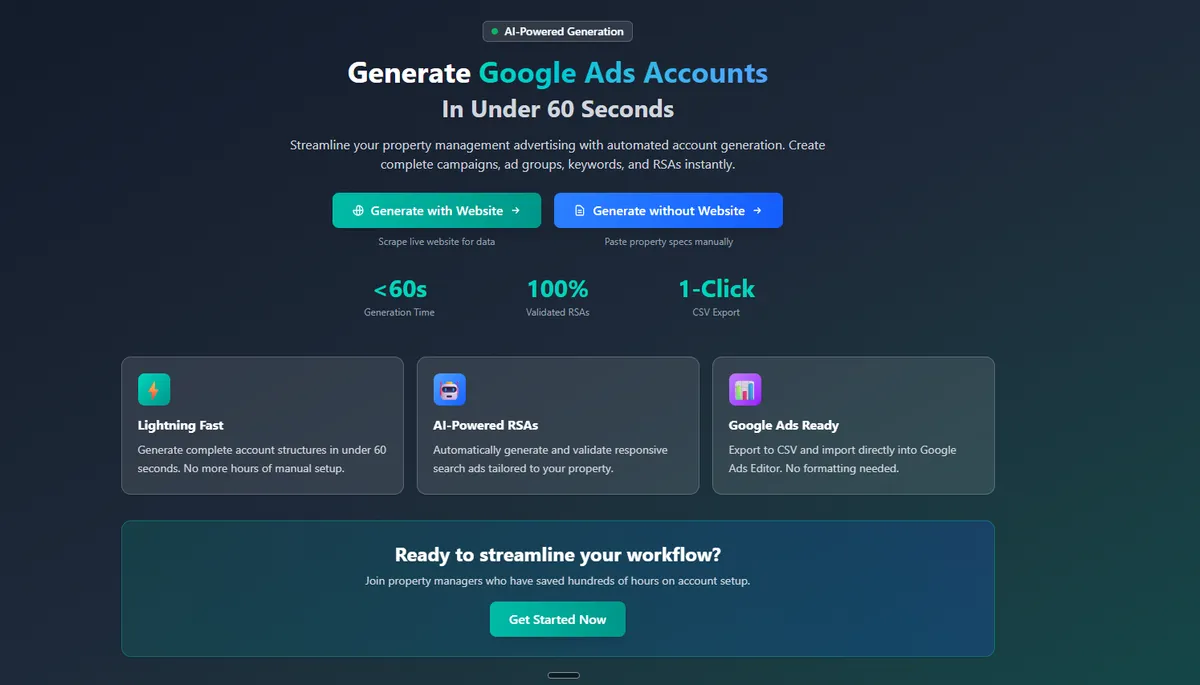
The Account Builder takes six inputs: property name, website URL, target geographies (3-10 neighborhoods), inventory types (studio through penthouse), tone of voice, and target audience. That’s it. Everything else is derived.
First, it scrapes the property website to extract the actual amenities, features, and selling points — pool, fitness center, pet-friendly, whatever the property genuinely offers. It parses the street address from the site and geocodes it to get precise latitude and longitude for radius targeting.
Then it generates the complete account structure:
- 4 campaigns — BDRM (ad groups per inventory type), GEO (ad groups per neighborhood), Brand, and Remarketing
- 200 to 800 keywords — scaled to the number of geographies and inventory types
- Fully assembled RSAs for every search ad group — 15 headlines and 4 descriptions each
The RSA copy is the critical part. Every headline is sourced from what the website actually says. If the property doesn’t mention “luxury finishes” on its site, that phrase doesn’t appear in the ads. This isn’t a template filled with generic apartment copy — it’s verified content, following the same ad copy verification standard used across the entire portfolio.
The rule is simple: empty is better than inaccurate.
The output is a Google Ads Editor CSV — campaigns, ad groups, keywords, ads, location targets, bid strategies, start and end dates — ready to import. All ads are set to Paused for human review before going live.
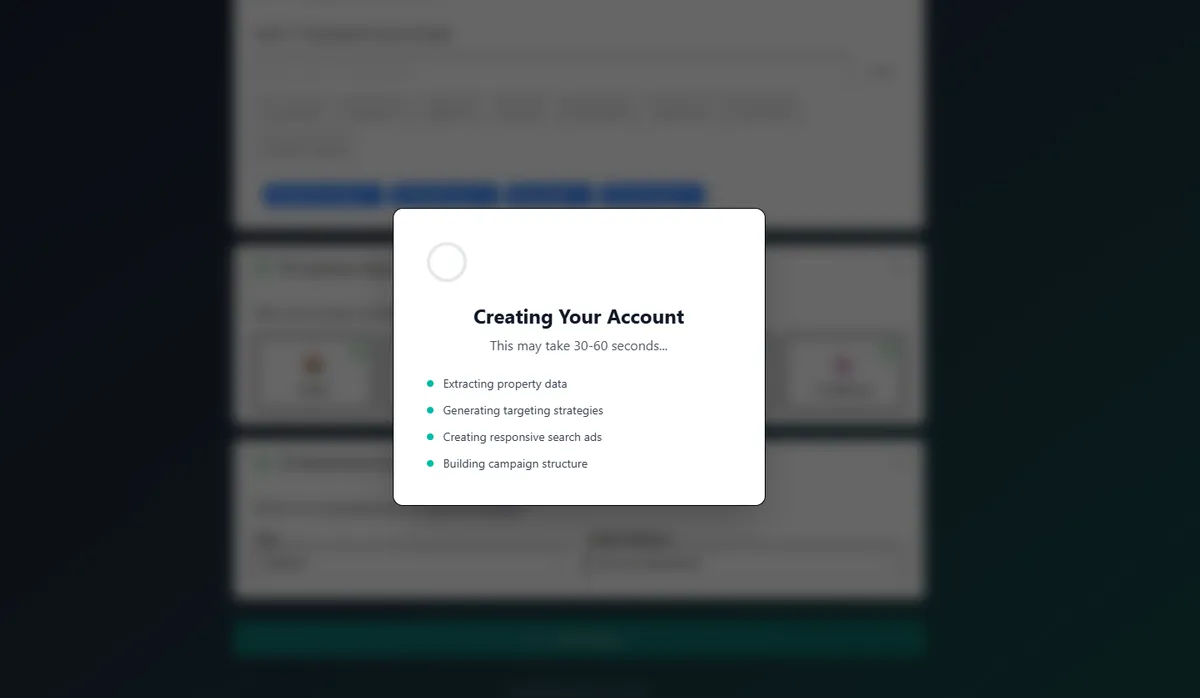
Total execution time per account: 8 to 15 seconds.
The Result
What used to take 2-4 hours of manual work per account now takes under 15 seconds. The agent has generated 10-20 complete account structures, each with perfect naming consistency and standardized settings.
The first time the agent proved itself outside of my own workflow was when a teammate needed two new accounts built quickly. I handed them two complete Google Ads Editor CSVs in about 15 minutes — including the time to gather the property information and review the output. What would have been most of a workday for them was done before their next meeting.
Every build follows the same naming conventions, the same campaign structure, the same negative keyword lists, the same geo-targeting methodology. No variance. No drift. No downstream cleanup.
This is one of 22 agents running in production across 118 accounts, orchestrated by a 600-line operational playbook.